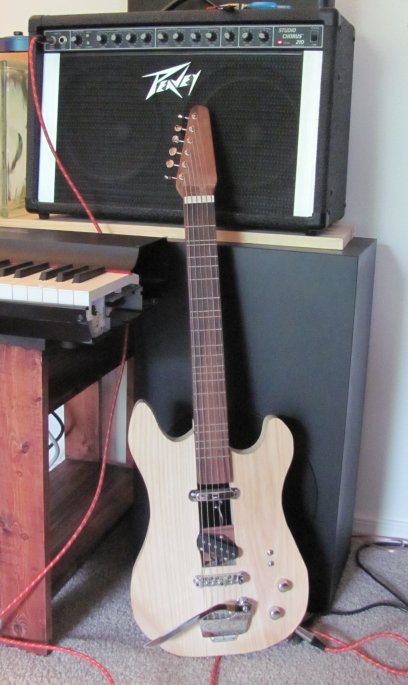
This article is about my experience building several guitars based on just intonation rather than 12-tone equal temperament (12-TET). My aim is to show that just intonation is a viable alternative to 12-TET, even on fretted instruments, and that with a little careful design, one may build a guitar capable of playing familiar music with better intonation than is available in 12-TET.
Secondarily, I hope to provide a decent introduction to the mathematical foundations of tonal music. That said, I should also note that there's really nothing "original" in this article, from the standpoint of music theory. I am merely trying to draw attention to what is already known. However, much of this knowledge is hard to find if you don't already know what you're looking for, and it isn't as well known as it should be.
I should also note that I'm no expert on music theory in general, and only a casual guitarist. This article assumes a basic familiarity with musical terminology (octaves, semitones, names of intervals, scales, major, minor, etc..) and basic math. (The underlying math of just intonation turns out to be simpler in most respects than 12-TET, since it's based on fraction multiplication rather than logarithms.)
This isn't intended as a tutorial for building guitars in general. For that, see my cigar box guitar tutorial, or any good book on the subject.
One of the most fundamental ways of expressing the relationship between two pitches is as a ratio of whole numbers. For instance, an octave interval is a ratio of 2:1, a perfect fifth interval is 3:2, and so on. We hear these sounds as harmonious in a way that random pitches played together aren't. There are a couple of reasons why this might be true. One is that musical sounds consist of not just one pitch, but a multitude of pitches at integer multiples of the "base" pitch, called the fundamental. (On a piano, it's actually a bit more complicated than this due to the Railsback curve, but that's something you usually only need to be aware of if you're tuning a piano.) When pitches are whole number ratios of each other, their harmonics line up. For instance, with our perfect fifth example, the 2nd harmonic (I'm defying convention here by counting the fundamental as the first harmonic) of the "3" note and the third harmonic of the "2" note are the same. If we give our notes absolute pitches, let's say they're 300 hz and 200hz:
300 600 900 1200 1500 1800...
200 400 600 800 1000 1200...
In general, tones at two frequencies can sound good together if they're far apart or if they coincide exatly. When two pitches almost line up but don't, we perceive the difference in pitch as a warbly beat frequency, or if the difference lies between about 20 cents and 200, a harsh, clashing sound. Whether two notes sound good together is not just a matter of whether the fundamentals are compatible, but whether all their harmonics are as well.
Another characteristic of notes made from whole number frequency ratios is that they settle into a sound that repeats itself over and over exactly, rather than one where all the sounds have a constantly phase relationship with each other.
Western music developed scales around these whole number ratios. One such scale is the major scale:
| 1:1 | I - unison (tonic) |
| 9:8 | II - major second |
| 5:4 | III - major third |
| 4:3 | IV - perfect fourth (subdominant) |
| 3:2 | V - perfect fifth (dominant) |
| 5:3 | VI - major sixth |
| 15:8 | VII - major seventh |
| 2:1 | IIX or I - octave |
You'll note that these are all ratios involving small-ish numbers. (The major third and major sixth were controversial; pythagorean tuning only used intervals that could be constructed from the prime factors of 2 and 3, but eventually 5 entered common usage.)
This was all well and good, until 12-tone equal temperament (12-TET) was invented in the late 16th century. Equal temperament is a division of the octave into a certain number of (logarithmically) equal intervals. The key insight of equal temperement is that by dividing the scale up into 12 semitones, you get notes that line up pretty well against a just major scale:
(That's 12TET on top, and just tuning on the bottom -- long lines are notes of the major scale)
The advantage of ET is that it provides a degree of flexibility that wasn't present in just intonation. You can choose any note as a root to build a scale around. (With JI you often need to re-tune or even build new instruments if you want to play in a different key.) The ability to change key arbitrarily in the middle of a song is something that modern musicians now take for granted. Another neat thing about defining a fifth as exactly seven semitones is that if you go up in pitch by a perfect fifth twelve times, you visit every note and return to the note where you started (12 and 7 sharing no common factors). This is the "circle of fifths". The same is true of fourths.
The main downsides of 12-TET are that you're limited to those 12 notes, and all intervals except the octave are to some degree out of tune. Thirds and sixths, on the other hand, are quite off.
(As an example of how the math works out, suppose C at 261.6hz is the root of the key, and we want to find the frequency of the perfect fifth of the scale, G. We get 261.6hz * (3/2) = 392.4hz as the ideal frequency in just intonation. In 12-TET, we get 261.6hz * 2^(7/12) = 391.95hz. That's pretty close; less than 2 cents difference. For the major third, E, we have 261.6hz * (5/4) = 327.0hz for JI, and 2^(4/12) = 329.59, a difference of about 13 and a half cents.)
Nearly all modern music is composed and performed in 12-TET, and music theory is almost presented that way as well. Just intonation, when mentioned at all, is often treated as a historical footnote. This isn't to say that all modern music rigidly conforms to equal temperament; instruments with contiuous pitch (voice, violin, trombone, fretless bass, etc..) can accomodate JI just fine, and performers may gravitate towards just tunings instinctively without even being aware that they're doing it.
Something I find frustrating about 12-TET as the basis of musical education is that it adds a layer of obfuscation over the mathematical structure of what's really happening, and so music is typically taught as a bunch of arbitrary rules memorized by rote. To know that a major triad is composed of a note, and the note four semitones above that, and a third note three semitones above the second, is very simple and practical, but it doesn't tell me what a major triad really is. Why does a major triad sound better than some other collection of notes? Without seeing the numeric ratios, it isn't clear what's actually happening behind the scenes.
It's worth mentioning that 12-TET isn't the only option; 31-TET has nicer thirds and sixths (at the expense of slightly worse fourths and fifths). 19-TET is also quite usable. One assumption common to 12-TET, 19-TET, and 31-TET is that the octave must come out exactly, even if nothing else does. It may be that there are equal temperaments that have a slightly-out-of-tune octave which are better matches for the other intervals. (Someday, maybe, I'll write a program to search for such a scale.)
Unlike 12-TET, there isn't a definitive list of notes that must be present in order to qualify as just intonation. Any whole-number ratio will do, so there are an infinite (or more specifically, countably infinite) collection of notes to choose from.
Another complication of just intonation is that some notes will only be available in certain keys. (Electronic synthesis and fretless instruments are exceptions to this, as they can, in theory, play any note within their pitch range.) In practice, however, we do retain at least some flexibility, as will be seen later.
Though JI lacks some of the flexibility of 12-TET, we gain in precision -- by being able to play notes exactly, we can play melodies and chords with greater consonance, and we can also play notes that have no equivalent in ET, like (7:6).
When building a guitar based on just intonation, there is one major design issues that must be solved up-front before making the fingerboard. This is, where do we place the frets? A secondary design issue is what pitch are the strings going to be tuned to? The later question can be put off until we need to put the strings on, but our decisions might affect where our frets should be, so in practice we have to solve that one up-front as well.
The answers we come up with for these two questions will determine what notes can be played on the instrument. In general, we don't want our fingerboard to have an unreasonable number of frets, or to have frets that are too close together to be playable, and neither do we want an unusually large number of strings -- probably no more than six or seven, unless we're building a harp guitar. At the same time, we want to include all the notes that we're likely to want to play, and we want to avoid notes that aren't musically useful.
If we know we're only going to play in a certain scale, such as C major, we can get by with as few as two frets and four strings -- maybe less. If we want to play in multiple scales over a wide tone range, we will need more frets and more strings.
An easy way to ensure that our guitar has all the notes we want is simply to imagine the guitar having one string, with the open string as the tonic note, and place a fret for every note (except the tonic) in our chosen scale. Later, when we add more strings tuned to different notes, each new string will interact with the tuning of that string to introduce some new notes we didn't specifically want and (we hope) some duplicates of the ones we do.
Wikipedia has a surprisingly comprehensive list of candidate notes (including impressive-sounding names) we could include in our scale. Which should we include, and which should we leave out? This is largely a matter of taste, but we can narrow it down a bit by asking ourselves what kind of music we want to play.
We get the tonic for free as the open string. If we want to play western music (and just about anything else), then the six other notes of the major scale is a good start, and if we throw in three more notes we get the natural minor scale as well. While we're at it, we can include the minor second and augmented fourth (i.e. the tritone) to get a complete chromatic scale.
Unfortunately, there isn't a universally-accepted just chromatic scale. The tritone is one such controversial note that has many possible candidates. 7:5 and 10:7 are far enough apart that they can both be accomodated fairly easily. 45:32 and 64:45 I find to be more useful, but they're a lot closer together.
The minor seventh is another problem: it could be 7:4, 16:9, or 9:5, depending on who you ask. 7:4 and 9:5 are far enough apart (barely) to be individually playable if we were to include both, but 16:9 lands right between them and it's very close to 9:5. My initial solution was just to omit 16:9. However, I now prefer to include the 16:9 and omit the other two. (16:9 is the "complement" of 9:8, which is a more important note in western music than the complements of the other two, which are 8:7 and 10:9. A good rule of thumb appears to be that if a note is important, then its complement is equally important. By complement, I mean the interval that you add to an existing interval to make an octave. More on that later.)
Another workaround when neighboring notes are uncomfortably close is to just place a fret at the average, and then treat them as equivalent. That note would then no longer be a just note, but rather a tempered note. I have so far managed to avoid doing this.
Now that we have the western scale more-or-less covered, we might want to include some other notes from foreign scales, or even make up our own scale. How do we search for likely notes?
Considering that all of the notes in the major scale are ratios of small whole numbers, we could just search exhaustively for all possible ratios involving numbers less than some threshold. (Fortunately, many ratios are equivalent, such as 2:1 and 4:2. We can throw out any ratios whose numbers aren't relatively prime, which is most of them.) That is what I did for my first just intonation guitar: I included all ratios of numbers 10 or less, plus a few extras (the minor second, 16:15; the lesser undecimal neutral second, 12:11; the septimal major sixth, 12:7). I overlooked the major seventh (15:8) unfortunately, and wished that I hadn't, but otherwise it worked out well, even if the fingerboard was a little crowded.
One interesting way of categorizing notes is by their prime limit. The prime limit can be found by reducing each interval to its prime factors, and taking the biggest one. For instance:
The major scale is composed of notes with a prime limit of 5 or less. Keep in mind that even with a prime limit of 3, the total number of possible notes is infinite: we can get away with notes like 1024:729, for instance. Including a few 7-limit notes is not a bad idea. I kind of like 7:6 -- aptly named the subminor third. (It's useful for constructing dominant seventh chords.) Some of the 11-limit intervals may also be nice to have, but you probably won't miss them unless you're specifically interested in composing 11-limit music. ( composed music with 11-limit intervals -- after that, even he gave up.)
In my most recent guitars, I adapted the scale used by Dante Rosati (from whose website I got the idea of making a just-intonation guitar in the first place), with a few notes omitted. Here are some More detailed notes. (Though I borrowed his scale, my design differs quite a bit from his in that he uses partial frets made from 1cm lengths of wire, each of which only touches a single string, whereas I use standard frets that go all the way across the fingerboard.)
Once we've decided our scale, we need to know where to actually place the frets on the fingerboard. For this, I wrote a simple computer program, but it should be straightforward (though tedious) with a calculator.
For some interval of the form a:b, its distance from the nut is: s*(1-(b/a)), where "s" is the scale length (the distance from the nut to the bridge). 25 1/2" (647.7 mm) is a common guitar scale length.
If all of the preceding discussion seems overly abstract, here's a simpler way to choose fret locations which yields similar results: First, start with the scale length, which we'll call S. If we place a fret at the midpoint between the nut and the bridge, or a distance of S/2 from the bridge, we get the octave (2:1) fret.
Next, we divide the scale length into thirds, placing a fret S*1/3 and S*2/3 from the nut. That gives us our perfect fifth fret (3:2), and another fret that's an octave and a fifth (3:1).
Dividing the fingerboard into fourths gives us our perfect fourth fret (4:3), and our 2nd octave fret (4:1), if we have enough space for it on our fingerboard. The S*2/4 is the same as our octave fret (2:1), so we can skip that one.
We can keep going like this, dividing the fingerboard into fifths, sixths, sevenths, on up the harmonic series. You'll probably want to stop at 10, and then selectively add a couple others like the minor second and major sevenths. This is essentially just another way of thinking about scale layout that will achieve similar results.
Installing the frets on a just-intonation guitar is not substantially different than installing frets on an equal tempered guitar, so I'm not going to cover that here. Partial frets are also a possibility; it turns out, they're not much more difficult that regular full frets.
Along with fret placement, we also need to know how the strings will be tuned. Unlike frets, you can easily change your mind and re-tune the guitar as many times as you like, though you may have to change strings if you make drastic changes.
We have a lot of options here. We could use:
One consideration for an instrument with a range that spans multiple octaves is that we'd like our scale to repeat at the octave -- if we go up or down an octave, we'd like the same notes to be available. This is trivially easy in 12-TET, since any set of intervals that adds up to 12 semitones is an octave. In just intonation, it's a little harder to construct an octave out of intervals. For instance, if we go up from the tonic by a major third (5:4) three times, we arrive at 125:64 instead of 2:1. There is, in fact, no way to construct an octave by stacking similar intervals. We can, however, construct an octave by stacking dis-similar intervals.
The rule for stacking intervals is that you treat them as fractions, and multiply to go up and divide to go down. For instance, suppose you start at the tonic (1:1) and go up by a major second (9:8) and then up again by a major fourth (4:3) -- what note do you land on? 1/1 * 9/8 * 4/3 = 36/24 = 3*12/2*12 = 3/2, which is a perfect fifth. So, a major second and a perfect fourth "add" together to make a perfect fifth.
Here are some useful equalities:
Notationally, I'm using addition of intervals to represent multiplication of the fractions. I think it's more intuitive to think composing intervals as addition.
There are many more equalities like these, but for now we'll just note that any interval can be turned upside down and multiplied by two to get a complementary interval that together with the original interval make up an octave.
Having a scale that repeats at the octave along with irregular fret spacings means that we'll probably want to have some strings that match other strings, but an octave up or down.
Dante Rosati's approach was to tune his guitar in alternating fourths and fifths. Thus his strings are (from treble to bass):
The tonic is C, so this is a CGCGCG tuning.
I used this tuning on an acoustic just-intoned guitar, and it works very nicely. Strumming it open gets you a C5 chord (C without the major 3rd), which sounds very nice. Playing melodies is pretty straightforward, and it's not too hard to remember where the important notes are.
The downside of this tuning, as I found, is that a perfect fifth difference between adjacent strings is a pretty big jump. Scales require a bit more hand movement than I like, and most of the chords (more on chords in the next section) were physically difficult due to the long reach required.
Also, consider our ability to transpose from one key to another. We know that, for each note corresponding to the open tuning of a particular string, we can play a whole scale without leaving that string -- all the notes are there. Therefore, with a CGCGCG tuning, we can play all the notes of our chosen scale in the key of C and the key of G. So, we can start in C, then transpose a perfect fifth up or (equivalently) a perfect fourth down, and then return back to C.
If we want to transpose up by a fourth from C to F, though, it's not so easy. In order to solve both the problem of difficult chords and to add more options for key changes, I decided on a tuning system that repeats every three strings, starting at the tonic, then up a fourth, then up a major second to the fifth from the tonic, then it reaches the octave with another fourth.
Here it is on a six string, tuned up to D. I find it convenient to think of the 3rd lowest string (i.e. the D string in standard tuning) as the tonic.
If we wanted a full 2-octave range, like a standard 6-string guitar, we might add a seventh bass string:
For my electric just-intonation guitar, I went with six strings, but I think the seventh string would be a very nice addition. However, I did find after a bit of playing that it was more convenient to tune the bottom string to 1:2, and so I eventually settled on:
I've been pretty happy with this tuning. Chords are much easier to play, and melodies don't require as much unnecessary hand movement.
I didn't know it at the time, but it turns out DADGAD is a pretty popular alternative tuning, used by Pierre Bensusan and Phil Keaggy, among others. It's also often used in celtic music.
Constructing a table of notes for the whole finger board is pretty easy -- for each string, just multiply the note corresponding to that open string by the list of notes in our scale.
Without further ado, here's the full fingerboard of my electric 6-string just-intonation guitar (in GADGAD tuning):
String Tuning
| 0.0 | 38.89 | 62.23 | 69.14 | 88.90 | 103.72 | 124.46 | 155.58 | 177.80 | 186.69 | 207.43 | 233.36 | 248.92 | 266.70 | 276.58 | 290.41 | 311.15 | 345.72 | 363.01 | 373.38 | 388.94 | 400.05 | 414.87 |
| 2:1 | 32:15 | 20:9 | 9:4 | 7:3 | 12:5 | 5:2 | 8:3 | 14:5 | 20:7 | 3:1 | 16:5 | 10:3 | 7:2 | 18:5 | 15:4 | 4:1 | 9:2 | 24:5 | 5:1 | 16:3 | 28:5 | 6:1 |
| 3:2 | 8:5 | 5:3 | 27:16 | 7:4 | 9:5 | 15:8 | 2:1 | 21:10 | 15:7 | 9:4 | 12:5 | 5:2 | 21:8 | 27:10 | 45:16 | 3:1 | 27:8 | 18:5 | 15:4 | 4:1 | 21:5 | 9:2 |
| 4:3 | 64:45 | 40:27 | 3:2 | 14:9 | 8:5 | 5:3 | 16:9 | 28:15 | 40:21 | 2:1 | 32:15 | 20:9 | 7:3 | 12:5 | 5:2 | 8:3 | 3:1 | 16:5 | 10:3 | 32:9 | 56:15 | 4:1 |
| 1:1 | 16:15 | 10:9 | 9:8 | 7:6 | 6:5 | 5:4 | 4:3 | 7:5 | 10:7 | 3:2 | 8:5 | 5:3 | 7:4 | 9:5 | 15:8 | 2:1 | 9:4 | 12:5 | 5:2 | 8:3 | 14:5 | 3:1 |
| 3:4 | 4:5 | 5:6 | 27:32 | 7:8 | 9:10 | 15:16 | 1:1 | 21:20 | 15:14 | 9:8 | 6:5 | 5:4 | 21:16 | 27:20 | 45:32 | 3:2 | 27:16 | 9:5 | 15:8 | 2:1 | 21:10 | 9:4 |
| 2:3 | 32:45 | 20:27 | 3:4 | 7:9 | 4:5 | 5:6 | 8:9 | 14:15 | 20:21 | 1:1 | 16:15 | 10:9 | 7:6 | 6:5 | 5:4 | 4:3 | 3:2 | 8:5 | 5:3 | 16:9 | 28:15 | 2:1 |
For comparison, here is what this looks like as a completed fingerboard:
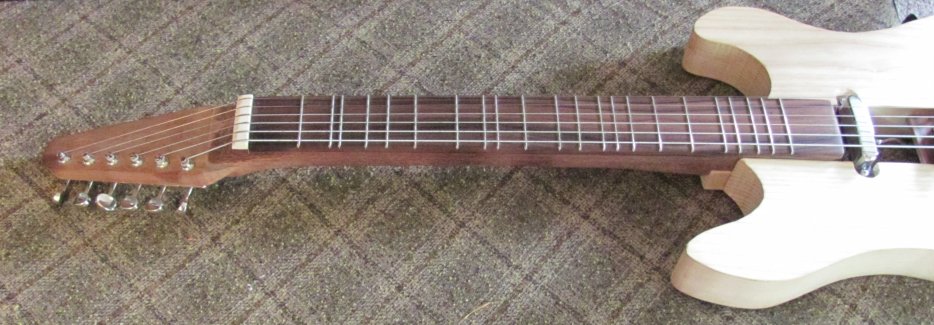
The table may be somewhat spacialy misleading, as the column alignment doesn't represent the true spacing between frets. For the most part, the frets are far enough away from each other that they won't present a playability issue with the exception of the 10:9 and 9:8 frets, which are only about 7mm apart, or about a quarter inch. Unfortunately, these are both important notes (as will be seen in the section on chords). The result of the closeness is that the 9:8 note sounds rather dull - it's difficult to play without muting the string somewhat with my fingertip, which is too large to fit in that space. For lack of a suitable workaround, I just accept this as a limitation.
The distance from the nut in millimeters is given on the top row. (This a 25-inch scale, or 622.3mm.) The open strings and the octave fret (half-way from the nut to the bridge) are highlighted. Note that I kept going after the octave and added a few notes that I thought were probably musically useful.
What suprised me was just how many usable notes there are. They aren't all winners; I can't imagine when I'm going to need, say, 64:45 or 56:15. On the whole, though, there are a lot of useful notes, and the major and minor scales show up quite prominently. That will prove very convenient as we move on to the next topic, chord construction.
This is where it starts getting interesting, and the elegance of the major and minor scales become apparent.
The major scale has seven unique notes, from which we can build three major triads, three minor triads, and a diminished triad. I'm going to pretend the diminished triad isn't there, because I haven't yet figured out how to deal with diminished triads. Major triads, though, are pretty simple. They're a set of notes with ratios of 4:5:6. Since notes that differ only by octave are considered equivalent, we could also write this as 2:3:5, or 4:6:10, or 5:8:10, or whatever, but I'll stick to 4:5:6 for now. Interestingly, these are all harmonics of the note two octaves below the root -- we can think of it as 1:4:5:6 if we like, and we can even stick in the missing harmonics to get 1:2:3:4:5:6. This would still be a major chord. If we add a seven onto a major triad we get, I believe, a dominant seventh (an accidentally appropriate name): 4:5:6:7.
Minor triads are a bit more subtle. They're composed of notes with the ratio of 10:12:15. The connection between them is less obvious than the notes in a major triad, but they can be re-formulated to make the pattern more clear: 60/6 : 60/5 : 60/4. As with major triads, they all have something in common with a certain other "virtual" note, but this time it's a note that is much higher -- two octaves and a fifth above the root.
Now that we have these formulas down, we can start building chords. We'll assume that the tonic (1:1) is C, and show the basic chords in C major and C harmonic minor.
These are built from the notes of the major scale, except that we build the second chord off of a root of 10:9 rather than 9:8, to make it work out a little nicer. I will follow the convention of writing major chords (4:5:6) with capital roman numerals, and minor chords (10:12:15) in lower-case.
Major chords:
Harmonic minor chords:
If we ignore the diminished chords, which I don't know what to do with, the other chords seem to fit nicely into place. The chords in the C major scale only require 8 distinct notes in order for the major and minor chords to work out exactly. Traditionally, the major scale only has 7 notes, but we only had to introduce the 10:9 note as an alternative to the 9:8 that would normally be used in its place.
This was a big surprise to me when I saw it, and confirms that the major scale isn't just some arbitrary collection of notes but rather they are a nice clean solution to a difficult constraint satisfaction problem. The harmonic minor works out pretty nicely as well. Both scales have chords with reasonable fingerings and they don't require notes that are particularly strange.
Deciding on the best voicing for a particular chord is largely a matter of preference, but here are some reasonable fingerings for the chords in C major:
I (C)
ii (d)
iii (e)
IV (F)
V (G)
vi (a)
Rather than give the actual note, I figured it was easier to understand if I labeled each fret according to what note it would be on the 1:1 string, where "x" means "don't play this string" and "1:1" means play it open.
It is interesting that we could play these six chords on a guitar with only three frets.
These basically work, but G major unfortunately suffers a bit, because it requires pressing down three strings on the 9:8 fret at the same time, which, as I mentioned earlier, is very close to the 10:9 fret. Consequently, G sounds rather dull and muted.
We can construct a G major from the notes 3:2, 15:8, and 9:4 anywhere on the fingerboard. It would be nice if we could use the 3:2 note on the 1:1 string, which conveniently has a 9:4 note (a fifth up from 3:2) two strings up on the same fret, but there is no 15:8 note on the 4:3 string to fill in the major third we need for our triad -- we would need to have included a 45:32 fret in our scale for that to have worked out. However, if we run our fret position calculation given above for 45:32, we see that it should be 179.78 mm from the nut. We already have a 7:5 fret that is 177.80 mm from the nut, a difference of less than 2 millimeters, which means it's 7.71 cents flat (if my math is right). It's not perfect, but it's not terribly far off either, and it gives us a much more playable G chord:
V (G)
The chords in C minor I'm not going to include, because I haven't come up with good fingerings for all of them. In theory, we could use the same C major chords for A natural minor, since the keys of C major and A natural minor are commonly regarded as having the same notes. However, I don't believe that C major and A natural minor are equivalent in just intonation the same way they are in 12-TET.
Here is a clip of how these chords (and a few variations) sound on my electric.
This is just a starting point, there are many other chords that are commonly used in modern music: dominant sevenths, suspended chords, etc...
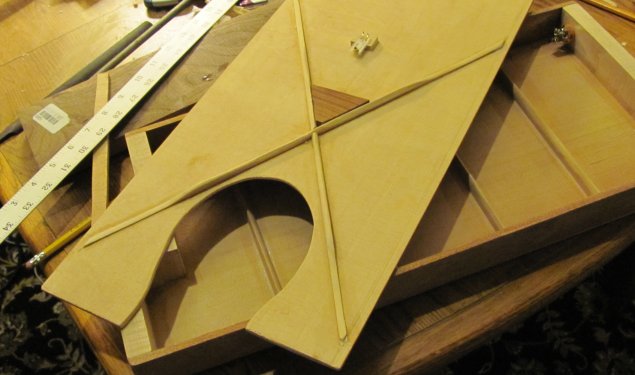
Building a guitar in just intonation is, aside from fret placement, very much like building any other kind of guitar. One could even modify an existing instrument, with difficulty varying by instrument (an electric with a bolt-on neck would probably be pretty easy, an acoustic guitar looks like it would be pretty difficult unless you're good at undoing glue joints, or willing to fill the existing fret slots and re-saw new ones).
When building an instrument from scratch, it's a good idea to pay special attention to intonation, and to design the instrument in such a way that it can be easily adjusted. A more precise tuning system isn't much help if the intonation is off. On acoustics, I'm a big fan of movable bridges. Electrics, on the other hand, usually have individually-adjustable saddles.
One big surprise on my electric was that the open strings were much flatter than they were supposed to be relative to the fretted notes. This may have been due to the fact that pressing down on the string causes it to go sharp by a little bit, and when placing frets one should include some small correcting factor to compensate, or I may have just installed the nut in slightly the wrong place. In the end, I just removed the nut, cut a bit off the end of the fingerboard, and re-attached the nut a little closer in. This was a big improvement.
Testing intonation, it turns out, is easy with the right tools. Conventional guitar tuners work ok for basic tuning to get in the ballpark, but they're always going to be a little off, since they're usually designed for 12-TET. I've found that an oscilloscope works very well. The trick is to adjust the horizontal sweep to match the tonic note (1:1), which you'll probably want to set to middle C or something like that. (My oscilloscope's built-in horizontal sweep tends to drift on its own, so I use a laptop generating a sawtooth wave as an external source for the X-axis.) Now, if you play 1:1, you should expect to see a standing wave. If it drifts one way or the other, tune the string to make it stationary. Interestingly, most of the other notes, if the frets are properly aligned, result in a standing wave as well. If they drift a bit to the right or left, it usually means the intonation is off and you need to make some adjustments (if possible).
Besides being a very precise tuning aid, the oscilloscope is fun to watch in its own right.
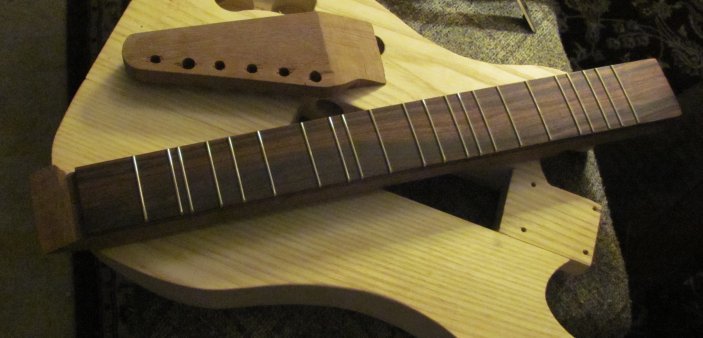
Another lesson I learned is that tremolo systems can be more trouble than they're worth. They can be a lot of fun, but it generally just knocks everything out of tune. If you really want a tremolo arm, then I'd recommend planning to install a roller nut or a locking nut and a roller bridge.
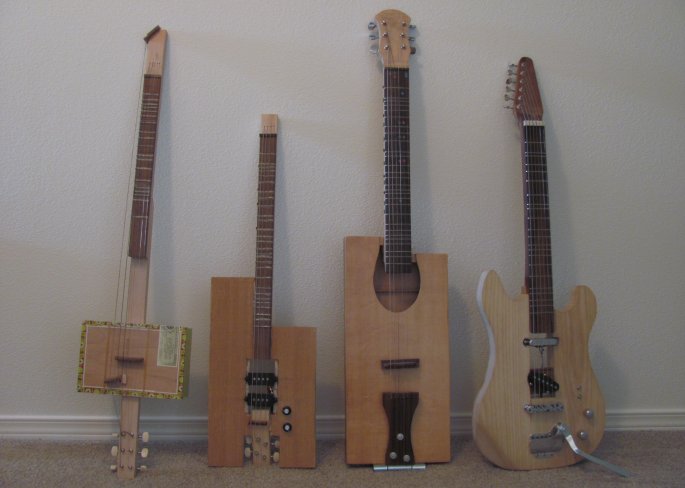
I have built both an electric and a box-shaped acoustic just intoned guitar (in addition to some prototypes), and I'm pretty happy with them both. (Update: I now also have a nylon-string just intonation cigar box guitar and an XV-300 from GFS that I've converted over to just intonation.) Electrics and acoustics each seem to benefit in different ways from the improved consonance of just intonation. The subtle differences between various intervals seem more pronounced on the acoustic. The electric seems more sensitive to proper intonation -- if it's off, chords sound wrong, but if it's dead on they sound great.
Chords in general have a "hollow" sound -- though thirds do give a major or minor feel to a chord, they tend not to add the "edgy" feel they do in 12-TET. This could be good or bad, depending on what you're aiming for. One could make a reasonable case that the somewhat out-of-tune thirds add a lot to the character of 12-TET, and to take that away detracts from the music. On the other hand, with heavy overdrive, a perfectly in-tune major chords sounds very good.
Melodies sound more expressive, in my view.
Being stuck in one key and not really being able to use barre chords can be kind of a drag. Playing with other people is a little harder when you can't just change key to whatever everyone else is playing. (I really don't have much experience playing with other people -- I'm not sure if a just intonation guitar would clash with other 12-TET instruments or not, even in the same key.)
With an electric, it may be possible to transpose into any key with a pitch-shifter effects pedal.
In the end, I'd really need to either improve my musical ability or put one of these guitars into the hands of an accomplished musician to really explore the benefits of just intonation. In the meantime, I think this exercise has helped me a great deal in understanding the mathematical underpinnings of modern music, and I would recommend it for anyone wanting to make a guitar with a different kind of sound.
Here is a collection of short audio clips, which demonstrate how the tuning system sounds:
(It turns out that old hymns are a pretty good way to familiarize oneself to a new tuning system.)
These really aren't the greatest examples, but they should at least suffice to show that "normal" music is doable. These were all recorded a long time ago; some day maybe I'll get around to doing some new recordings...
Pierce's The Science of Musical Sound is a very good overview of the things we've figured out about the way we perceive music.
Holmholtz (1821-1894) did some amazing research to lay the foundations of what we know about the perception of music.
Partch (1901-1974) applied Helmholtz's research to compose new music, based on the mathematical foundations of just intonation, but deliberately distancing itself from the influences of modern western music. He had to build new instruments to play his music.
Johnston studied under Partch for a time, and adopted just intonation for his own compositions, but unlike Partch he did not disdain western music. Rather, he used just intonation along with modern music theory and contemporary musical influences to write new music. He wrote a re-harmonization of Amazing Grace that's worth hearing. His book is more or less a collection of essays. One of the points he makes that has stuck with me is that by throwing out the approximations of ET and playing the exact note we intended, we make it possible to make musical distinctions that weren't possible before. Effectively, when we drain the swamp, a whole lot of new possibilities for subtlety and musical complexity arises.
Hopkin's book I included because it covers the fundamental mechanics of how musical instruments work, from the perspective of someone who isn't interested so much in copying existing instruments, as building new, unconventional ones.
| 2:1 | 32:15 | 20:9 | 9:4 | 7:3 | 12:5 | 5:2 | 8:3 | 45:16 | 128:45 | 3:1 | 16:5 | 10:3 | 32:9 | 15:4 | 4:1 | 64:15 | 9:2 | 24:5 | 5:1 | 16:3 | 6:1 | 32:5 | 20:3 |
| 3:2 | 8:5 | 5:3 | 27:16 | 7:4 | 9:5 | 15:8 | 2:1 | 135:64 | 32:15 | 9:4 | 12:5 | 5:2 | 8:3 | 45:16 | 3:1 | 16:5 | 27:8 | 18:5 | 15:4 | 4:1 | 9:2 | 24:5 | 5:1 |
| 4:3 | 64:45 | 40:27 | 3:2 | 14:9 | 8:5 | 5:3 | 16:9 | 15:8 | 256:135 | 2:1 | 32:15 | 20:9 | 64:27 | 5:2 | 8:3 | 128:45 | 3:1 | 16:5 | 10:3 | 32:9 | 4:1 | 64:15 | 40:9 |
| 1:1 | 16:15 | 10:9 | 9:8 | 7:6 | 6:5 | 5:4 | 4:3 | 45:32 | 64:45 | 3:2 | 8:5 | 5:3 | 16:9 | 15:8 | 2:1 | 32:15 | 9:4 | 12:5 | 5:2 | 8:3 | 3:1 | 16:5 | 10:3 |
| 3:4 | 4:5 | 5:6 | 27:32 | 7:8 | 9:10 | 15:16 | 1:1 | 135:128 | 16:15 | 9:8 | 6:5 | 5:4 | 4:3 | 45:32 | 3:2 | 8:5 | 27:16 | 9:5 | 15:8 | 2:1 | 9:4 | 12:5 | 5:2 |
| 2:3 | 32:45 | 20:27 | 3:4 | 7:9 | 4:5 | 5:6 | 8:9 | 15:16 | 128:135 | 1:1 | 16:15 | 10:9 | 32:27 | 5:4 | 4:3 | 64:45 | 3:2 | 8:5 | 5:3 | 16:9 | 2:1 | 32:15 | 20:9 |
| 1:2 | 8:15 | 5:9 | 9:16 | 7:12 | 3:5 | 5:8 | 2:3 | 45:64 | 32:45 | 3:4 | 4:5 | 5:6 | 8:9 | 15:16 | 1:1 | 16:15 | 9:8 | 6:5 | 5:4 | 4:3 | 3:2 | 8:5 | 5:3 |
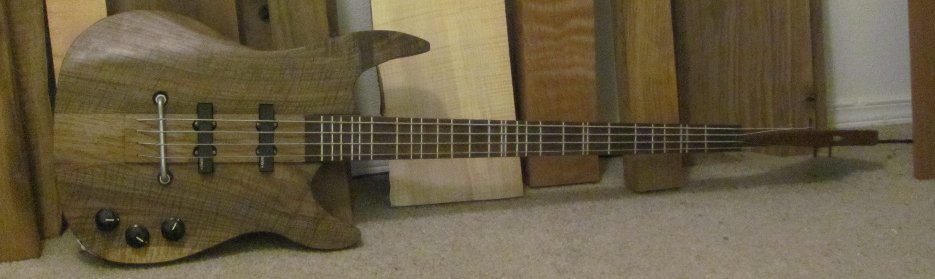
| 2:1 | 32:15 | 20:9 | 9:4 | 7:3 | 12:5 | 5:2 | 8:3 | 45:16 | 128:45 | 3:1 | 16:5 | 10:3 | 24:7 | 32:9 | 18:5 | 15:4 | 4:1 | 64:15 | 9:2 | 24:5 | 5:1 | 16:3 | 6:1 | 32:5 | 20:3 | 64:9 | 15:2 | 8:1 |
| 3:2 | 8:5 | 5:3 | 27:16 | 7:4 | 9:5 | 15:8 | 2:1 | 135:64 | 32:15 | 9:4 | 12:5 | 5:2 | 18:7 | 8:3 | 27:10 | 45:16 | 3:1 | 16:5 | 27:8 | 18:5 | 15:4 | 4:1 | 9:2 | 24:5 | 5:1 | 16:3 | 45:8 | 6:1 |
| 4:3 | 64:45 | 40:27 | 3:2 | 14:9 | 8:5 | 5:3 | 16:9 | 15:8 | 256:135 | 2:1 | 32:15 | 20:9 | 16:7 | 64:27 | 12:5 | 5:2 | 8:3 | 128:45 | 3:1 | 16:5 | 10:3 | 32:9 | 4:1 | 64:15 | 40:9 | 128:27 | 5:1 | 16:3 |
| 1:1 | 16:15 | 10:9 | 9:8 | 7:6 | 6:5 | 5:4 | 4:3 | 45:32 | 64:45 | 3:2 | 8:5 | 5:3 | 12:7 | 16:9 | 9:5 | 15:8 | 2:1 | 32:15 | 9:4 | 12:5 | 5:2 | 8:3 | 3:1 | 16:5 | 10:3 | 32:9 | 15:4 | 4:1 |
| 2:1 | 32:15 | 20:9 | 9:4 | 75:32 | 12:5 | 5:2 | 8:3 | 45:16 | 128:45 | 3:1 | 16:5 | 10:3 | 256:75 | 32:9 | 18:5 | 15:4 | 4:1 | 64:15 | 9:2 | 24:5 | 5:1 | 16:3 | 6:1 | 32:5 | 20:3 | 64:9 | 15:2 | 8:1 |
| 3:2 | 8:5 | 5:3 | 27:16 | 225:128 | 9:5 | 15:8 | 2:1 | 135:64 | 32:15 | 9:4 | 12:5 | 5:2 | 64:25 | 8:3 | 27:10 | 45:16 | 3:1 | 16:5 | 27:8 | 18:5 | 15:4 | 4:1 | 9:2 | 24:5 | 5:1 | 16:3 | 45:8 | 6:1 |
| 4:3 | 64:45 | 40:27 | 3:2 | 25:16 | 8:5 | 5:3 | 16:9 | 15:8 | 256:135 | 2:1 | 32:15 | 20:9 | 512:225 | 64:27 | 12:5 | 5:2 | 8:3 | 128:45 | 3:1 | 16:5 | 10:3 | 32:9 | 4:1 | 64:15 | 40:9 | 128:27 | 5:1 | 16:3 |
| 1:1 | 16:15 | 10:9 | 9:8 | 75:64 | 6:5 | 5:4 | 4:3 | 45:32 | 64:45 | 3:2 | 8:5 | 5:3 | 128:75 | 16:9 | 9:5 | 15:8 | 2:1 | 32:15 | 9:4 | 12:5 | 5:2 | 8:3 | 3:1 | 16:5 | 10:3 | 32:9 | 15:4 | 4:1 |
| 81:16 | 27:16 | 9:16 | 3:16 | 1:16 | 1:48 | 1:144 | 1:432 | 1:1296 |
| 81:8 | 27:8 | 9:8 | 3:8 | 1:8 | 1:24 | 1:72 | 1:216 | 1:648 |
| 81:4 | 27:4 | 9:4 | 3:4 | 1:4 | 1:12 | 1:36 | 1:108 | 1:324 |
| 81:2 | 27:2 | 9:2 | 3:2 | 1:2 | 1:6 | 1:18 | 1:54 | 1:162 |
| 81:1 | 27:1 | 9:1 | 3:1 | 1:1 | 1:3 | 1:9 | 1:27 | 1:81 |
| 162:1 | 54:1 | 18:1 | 6:1 | 2:1 | 2:3 | 2:9 | 2:27 | 2:81 |
| 324:1 | 108:1 | 36:1 | 12:1 | 4:1 | 4:3 | 4:9 | 4:27 | 4:81 |
| 648:1 | 216:1 | 72:1 | 24:1 | 8:1 | 8:3 | 8:9 | 8:27 | 8:81 |
| 1296:1 | 432:1 | 144:1 | 48:1 | 16:1 | 16:3 | 16:9 | 16:27 | 16:81 |
| 625:81 | 125:81 | 25:81 | 5:81 | 1:81 | 1:405 | 1:2025 | 1:10125 | 1:50625 |
| 625:27 | 125:27 | 25:27 | 5:27 | 1:27 | 1:135 | 1:675 | 1:3375 | 1:16875 |
| 625:9 | 125:9 | 25:9 | 5:9 | 1:9 | 1:45 | 1:225 | 1:1125 | 1:5625 |
| 625:3 | 125:3 | 25:3 | 5:3 | 1:3 | 1:15 | 1:75 | 1:375 | 1:1875 |
| 625:1 | 125:1 | 25:1 | 5:1 | 1:1 | 1:5 | 1:25 | 1:125 | 1:625 |
| 1875:1 | 375:1 | 75:1 | 15:1 | 3:1 | 3:5 | 3:25 | 3:125 | 3:625 |
| 5625:1 | 1125:1 | 225:1 | 45:1 | 9:1 | 9:5 | 9:25 | 9:125 | 9:625 |
| 16875:1 | 3375:1 | 675:1 | 135:1 | 27:1 | 27:5 | 27:25 | 27:125 | 27:625 |
| 50625:1 | 10125:1 | 2025:1 | 405:1 | 81:1 | 81:5 | 81:25 | 81:125 | 81:625 |